

- With age, cellular turnover slows, and hormones shift, leaving mature skin looking dull and feeling rough.
- Many women respond to dull and rough skin by scrubbing harder, exfoliating more often, and layering acids, which strips the skin barrier.
- Applying retinol, vitamin C, or acids to damaged skin increases stinging, redness, and flaking, and makes fine lines look deeper.
- Barrier repair products help your skin heal, but you must pause harsh topicals and reintroduce them as part of a skin cycling routine.
“Christine, I’m doing everything right. Why does my skin look worse?” I hear this in my treatment room every week, often from women over 50 with red, tight, stinging skin. When I take a closer look, I see a weak or stripped skin barrier. And here’s the surprising part: most of my clients are using the right products. They’re just using them the wrong way, and they often have over-exfoliated skin.
WHY IS OVER-EXFOLIATION COMMON IN MATURE SKIN?
As we age, cellular turnover slows down. When dead cells build up, the scrubs you’ve relied on for years can’t keep up. At the same time, fluctuating hormones decrease your skin’s ability to hold hydration. This may be why your skin looks dry and dull, feels rough, makeup isn’t lying flat, and pigmentation looks darker. The Menopause, Menstrual Cycle, and Skin Barrier Function study takes a deeper dive into how your skin changes over the age of 50.
In an effort to get that smooth glow back, many of my clients unknowingly over-exfoliate by:
- Scrubbing harder
- Exfoliating more often
- Over-layering acid exfoliators
HOW DOES OVER-EXFOLIATING DAMAGE THE SKIN BARRIER?
Your skin barrier is the top layer of your skin, called the stratum corneum. Think of this layer kind of like shingles on a roof. Your skin cells overlap like shingles, and ceramides, fatty acids, and cholesterol are the sealant between them that keeps moisture in and the weather out.
Exfoliants dissolve or scrub away the dead cells on that top layer. A little brightens and smooths. Too much wears away the sealant faster than your skin can rebuild it. This causes accelerated moisture loss, known as transepidermal water loss (TEWL). It also leaves your skin exposed to wind, weather, and daily toxins it typically blocks.
Signs you’ve over-exfoliated or damaged your barrier:
- Products you’ve used for years suddenly sting or burn
- Your skin feels tight, even right after you moisturize
- Redness that lingers, or new sensitivity
- Flaking, or a rough, patchy texture
- A shiny, tight, almost “plastic” look (that’s not glow, my friends)
- Breakouts or more oil than usual
- Dull, uneven tone, even though you’re exfoliating more
- Fine lines that look deeper than they did a few months ago
HOW ANTI-AGING TREATMENTS MAKE STRIPPED BARRIERS WORSE?
When skin starts to look dull, rough, or more lined, many of my clients apply more retinol, vitamin C, and acids. I understand the instinct. But on a stripped barrier, harsh actives do more damage than good. When your skin is over-exfoliated, actives absorb faster and deeper than they’re meant to, but not in a good way. This is why even the gentle products you’ve used for years begin to sting or irritate. Irritated skin looks older, so you layer more retinol, vitamin C, and acids, which makes your skin look older. It’s a vicious cycle.
After 26 years as a Master Esthetician, I can tell you the fix isn’t giving up your anti-aging products forever. It’s pressing pause to allow your barrier to heal. Once your skin heals, begin strategically cycling harsher anti-aging treatments with barrier-repair products.
WHY BARRIER REPAIR AND BARRIER MAINTENANCE IS ALL ABOUT BALANCE?
Building a skincare routine for mature skin is all about balance. And yes, you can still apply retinol, vitamin C, and acids without weakening your barrier! It all comes down to the quality of your products, how you layer them, and how frequently you apply them.
- Quality: Not all retinols, vitamin C, and acids are gentle enough for sensitive or mature skin.
- Layering: How you layer your products can be the difference between irritation and rejuvenation.
- Application frequency: Stronger treatments should only be applied once a day, or a few times a week.
HOW TO REPAIR YOUR SKIN BARRIER AFTER OVER-EXFOLIATING?
The protocol below will restore damaged barriers in 2 to 6 weeks. Severe or prolonged inflammation may take months to heal.
STEP 1: PAUSE EXFOLIATION AND HARSH ACTIVES
Pause retinol and Vitamin C for at least 2 weeks and pause exfoliation for 1 week. When your skin feels less reactive, apply CBE Botanicals Enzyme Rescue Mask 1 to 2 days a week in the evening after cleansing your skin. The Papaya Enzymes and Pumpkin Enzymes gently dissolve dead cells without dissolving tissue, while the Japanese Green Tea Extract soothes and calms your fragile skin.

STEP 2: GENTLE CLEANSER
Start with the NeoGenesis Cleanser or CBE Botanicals Clean + Gentle Cleanser. Both cleanse without stripping your barrier. In fact, they balance your skin’s pH levels, which is key to rebuilding your barrier.
STEP 3: HYDRATION LAYER
NeoGenesis Moisturizing Mist restores hydration and rebalances your skin’s pH. Reapply throughout the day whenever your skin feels tight, not just after cleansing. I also like to use it to set my makeup.

STEP 4: BARRIER SUPPORT CREAM
Now it’s time to repair your skin’s barrier. Choose from one of the products below.
- Dr. Esthé Dual Barrier Renewal Cream is an advanced barrier repair cream that mimics your skin’s natural lipid layer. It’s designed specifically to prevent transepidermal water loss, containing Ceramides and 2 Weights of Hyaluronic Acid. Clients with chronically parched or sensitive skin, or who live in dry climates, use this formulation year-round. Apply morning and evening, or only in the morning.

- NeoGenesis MB-2 Probiotic Balm delivers an instantaneous skin barrier. It contains 5 types of Live Probiotic Bacteria to rebuild natural barrier function. This product isn’t designed for long-term use. Use to repair your barrier when skin is inflamed, or to spot treat eczema, dermatitis, psoriasis, oncology dermatitis, and wounds. It’s a bit greasy, so you may prefer to use it only in the evening.
STEP 4: PROTECT
Complete your morning routine with broad-spectrum SPF protection. When your barrier is damaged, it’s even more sensitive to UV rays.
- Dr Esthé Sun Protection Ultra Repair SPF 50 combines sunscreen with Powerhouse Peptides and Derma Clera complex to strengthen your barrier.
- Pfect-A Solar Elixir Sunscreen is a silky-smooth serum that sinks rapidly into your skin. It also glides on easily over your makeup when you need to reapply.

SKIN CYCLING PROTOCOL FOR MATURE SKIN
Once your barrier has healed, skin cycling gradually reintroduces harsher ingredients without stripping your skin. Here’s how I build it out for my clients. Each cycle is four nights, then you repeat.
EVERY MORNING: VITAMIN C
Alternate between Triple C + Gold Serum and Brighten The Day Serum. Both are formulated with tetrahexyldecyl ascorbate, a gentle form of vitamin C that nourishes, calms, and brightens. Yes, you can use vitamin C on your retinol day, as long as you apply it in the morning. Finish with SPF.

NIGHT 1: EXFOLIATE
Cleanse with a pH-balancing formula like NeoGenesis Cleanser or CBE Botanicals® Clean + Gentle Cleanser. Both are gentle enough to double cleanse and to use on the eyes and lips to dissolve makeup.
Ideally, alternate your acid exfoliant with each cycle:
-
Cycle 1: NeoGenesis Salicylic Acid Gel. It has 2% salicylic acid to exfoliate while soothing redness, and it helps with the adult acne many women see in perimenopause.
- Cycle 2: CBE Botanicals® In the Clear Pads. They contain 5% mandelic acid, 5% lactic acid, and 0.5% salicylic acid. The textured pads add gentle mechanical exfoliation, and they’re refreshing on sweaty days.
NIGHT 2: RETINOL
Retinol brightens, fades pigmentation, and targets fine lines and wrinkles. I recommend encapsulated retinol, which doesn’t release until it reaches the deeper layers of your skin, so it’s much gentler on the surface. After cleansing, apply CBE Botanicals Sleep On It. I’m extremely sensitive to retinol, and this one is gentle enough for me. Some redness is normal and fades by morning, but your skin should never feel dry, flaky, or irritated. If it does, your barrier needs more time to heal.

NIGHTS 3 AND 4: REPAIR AND RECOVER
This is where the magic happens. Apply a regenerative serum, let it dry, then layer your preferred moisturizer. Both of the serums below work best when used at least once a day, so feel free to apply them in the morning too.
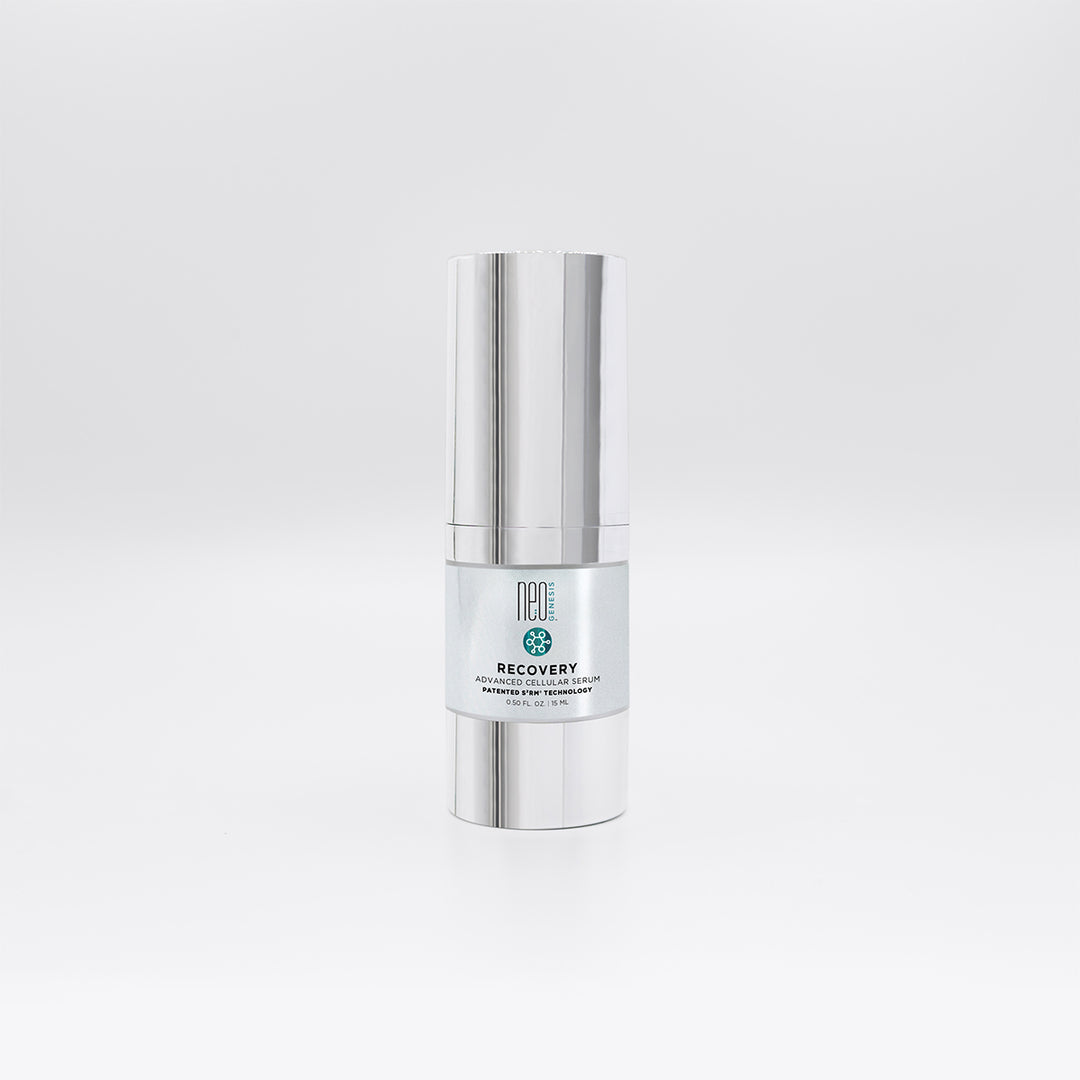
- For damaged, inflamed, or rapidly aging skin: NeoGenesis Recovery Serum contains 70% of NeoGenesis’s patented S²RM® technology. It’s the only skin cell technology I’ve found that truly works. Use it twice a day for at least 90 days.
- For proactive repair and fine lines: NeoGenesis Skin Restore Serum supports skin renewal and elasticity and helps fade sunspots.

Frequently Asked Questions
How long does it take to repair an over-exfoliated skin barrier?
Most damaged barriers recover in 2 to 6 weeks. Severe damage and inflammaging can take a few months to heal.
Should I stop exfoliating completely after 50?
No. Gentle exfoliation still helps with dullness and texture. When mechanical exfoliants stop working, transition to gentle acid or enzyme exfoliators.
Can I use retinol on the same day as acid exfoliators?
Yes, but never layer them together. Apply acid exfoliators in the morning and retinol at night or apply retinol the next day.